
Evenings with a new baby can sometimes feel long and unpredictable. Baby may be happy and content during the day, but as bedtime approaches, everything seems to change. Fussiness increases, settling takes longer, and you may find yourself wondering what you can do to help.
By the end of the day, parents are often tired themselves, and it can be frustrating when nothing seems to help Baby settle for sleep.
One gentle option that many families discover is baby massage before bed. Just a few minutes of slow, rhythmic touch can provide a comforting way to end the day and help Baby begin to relax.
Sometimes the simplest routines are the most meaningful.
Just your hands, a few quiet minutes, and time together with Baby.
Why Evenings Can Be Difficult for Baby
During the early months, Baby's brain and nervous system are developing rapidly. Throughout the day, they experience new sights, sounds, smells, movements, and interactions.
By evening, some babies become overtired or overwhelmed by all this stimulation. Others may be experiencing normal evening fussiness, hunger, or digestive discomfort.
You might notice that Baby:
Cries more easily in the evening.
Seems tired but has difficulty settling.
Becomes restless or uncomfortable.
Wakes shortly after being put down.
Needs more holding and comforting than earlier in the day.
These experiences are common during early infancy, although every Baby responds differently.
Creating a familiar bedtime routine can provide a little predictability during this sometimes challenging part of the day, and baby massage can be a lovely addition to that routine.
How Baby Massage Can Help Baby Relax Before Bed
Touch is one of the earliest senses to develop before birth, and it continues to play an important role in how Baby experiences their surroundings. When you massage Baby using gentle, rhythmic strokes, you provide consistent sensory information through their skin.
For some babies, this kind of touch can encourage relaxation, reduce restlessness, and provide a comforting experience before sleep.
Baby massage also creates opportunities for parents to observe Baby's responses, recognize their cues, and enjoy time together.
Some research suggests that regular infant massage may support the development of sleep-wake rhythms and aspects of infant sleep. However, results vary, and massage should be viewed as a supportive part of a bedtime routine rather than a guarantee of longer sleep (1).
Over time, the familiar sequence of massage, pajamas, feeding, and bedtime may help Baby recognize that the day is coming to an end.
When Is the Best Time to Start a Bedtime Baby Massage Routine?
As a practical rule of thumb, I often recommend starting a regular bedtime massage routine when Baby is around three months of age. By this time, many babies are becoming more comfortable lying on their backs, are more interested in interacting with their parents, and may be more receptive to a few minutes of gentle massage.
This doesn't mean you need to wait until three months to introduce gentle touch. Younger babies can also enjoy appropriate massage when they are comfortable lying on their backs and their arms lie relaxed, open and receptive.
The important thing is to choose a time when Baby is awake, relaxed, and interested in interacting with you. A very nice time to massage Baby is after bath time and before putting on pajamas.
As a special note: Please avoid massaging Baby immediately after a full feeding, especially when working on their tummy. And remember, if Baby is already crying or very unsettled, massage may not be what they need at that moment. Sometimes feeding, holding, or simply being close to you is more helpful.
A Simple Baby Massage Routine Before Bed
You don't need a long or complicated routine to introduce baby massage before bed. Start with five to ten minutes, focusing on Baby's legs, feet, and tummy. These gentle techniques are easy to incorporate into your evening and can be adjusted depending on how Baby responds.
Choose a comfortably warm room, and always massage Baby on the floor to avoid falls. Have everything you need within reach.
If you would like to use massage oil, choose one that is appropriate for Baby's skin. You can learn more in our article How to Choose the Best Oil for Baby Massage.
1. Begin With Gentle Leg Massage
Legs are often one of the easiest places for Baby to accept touch.
With Baby lying comfortably on their back, gently:
Hold one leg and use slow, smooth strokes from the hip toward the ankle.
Use your whole hand to maintain comfortable contact, rather than just your fingertips.
Repeat several times before moving to the other leg.
Keep your movements gentle and rhythmic, watching how Baby responds.
2. Move to Baby's Feet
Baby's feet are full of sensory receptors, making them a wonderful area to explore through touch.
Gently support one foot in your hand:
Using your thumbs, slowly stroke along the sole of Baby's foot from the heel toward the toes.
You can also make small, gentle clockwise circles across the sole of the foot.
Roll each toe with your fingers.
Repeat on the other foot, allowing Baby to move their legs naturally throughout the massage.
3. Add Gentle Clockwise Tummy Massage
If Baby is comfortable, you can include a little tummy massage.
Using your hand, gently massage Baby's abdomen in slow, clockwise circles using the belly button as your center marker.
Clockwise tummy massage follows the general direction of the large intestine and is traditionally taught in infant massage to encourage the movement of gas and stool through the digestive system. Some babies find this gentle movement comforting, particularly when they are experiencing mild gas discomfort.
Keep the pressure light and avoid tummy massage immediately after feeding or when Baby's abdomen is painful or distended. If Baby becomes uncomfortable, stop and try again another time.
4. Keep Your Movements Slow and Consistent
You don't need to rush through the massage or complete every stroke. Use slow, comfortable movements and allow Baby time to respond.
The goal isn't to perform a perfect massage routine. It's to make the experience enjoyable for both you and Baby. You might speak softly, sing a familiar song, or simply enjoy a few quiet moments together.
5. Watch Baby's Cues
One of the most important parts of baby massage is learning to recognize when Baby is enjoying the experience. Baby may show interest by looking toward you, relaxing their hands, or moving comfortably. If Baby turns away, becomes restless, cries, or seems uncomfortable, pause the massage. You can always try again another time.
Following Baby's cues helps make massage a positive experience rather than something that needs to be completed.
Creating a Familiar Bedtime Routine
Baby massage doesn't need to be a separate activity that adds more work to an already busy evening. Instead, think about how it can fit naturally into what you're already doing.
For example, your bedtime routine might include a warm bath, a few minutes of baby massage, pajamas, feeding, and a quiet cuddle before sleep. You might also choose to massage Baby without a bath or use just a few gentle strokes during a diaper change.
The important thing is finding a routine that feels comfortable and manageable for your family. Over time, these familiar experiences can become part of the rhythm of Baby's evening.
Frequently Asked Questions About Baby Massage Before Bed
Does Baby Massage Help Babies Sleep?
Baby massage may help Baby relax, settle more easily, and enjoy better sleep.
A 2023 study involving 140 infants found that babies who received a 15-minute bedtime massage for two weeks showed improvements in how quickly they fell asleep, the number of times they woke during the night, and their longest period of uninterrupted sleep (2).
Massage can be a wonderful addition to a comfortable, predictable bedtime routine!
How Long Should a Bedtime Baby Massage Last?
A bedtime massage can last anywhere from a few minutes to approximately fifteen minutes, depending on Baby's age, comfort, and interest. Even five minutes of gentle massage can be a lovely way to end the day.
As someone who massaged all three of my babies throughout their first year of life, our massage sessions usually lasted about 10 to 15 minutes, but there is no magic number. As long as both you and Baby are enjoying the experience, the exact length isn't important.
Can Baby Massage Help a Fussy Baby at Night?
Sometimes! Gentle massage can provide a comforting sensory experience, especially when Baby is receptive to touch. However, if Baby is already very upset, they may need feeding, holding, or another form of comfort before they are ready for massage.
If evening fussiness is something you're experiencing regularly, you may also enjoy our article Fussy Baby at Night? How to Help Your Baby Settle More Easily.
Do I Need to Massage Baby Every Night?
Not at all.
Although a familiar routine can be helpful, baby massage should never feel like another obligation. Some evenings you may have time for a full massage, while other nights a few gentle strokes are enough. Follow Baby's cues and choose what works best for your family.
Learn More About Baby Massage Through Best Beginnings
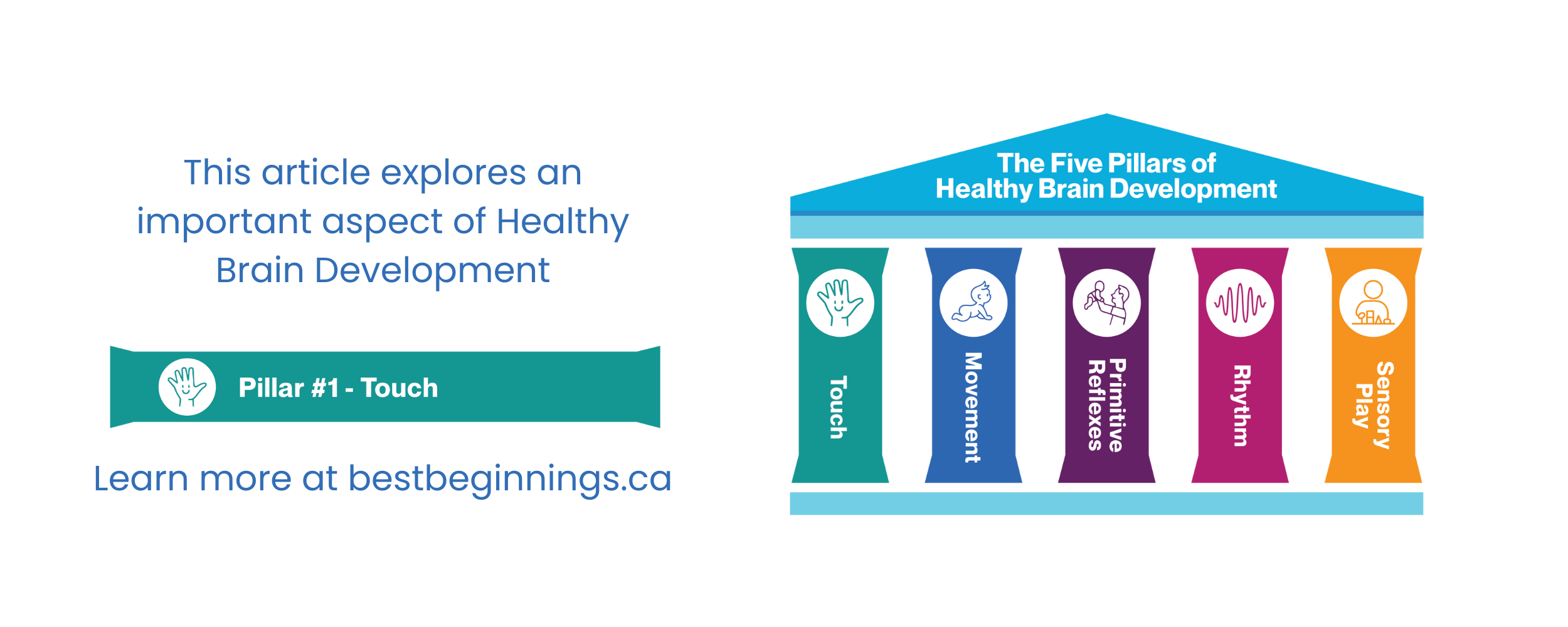
At Best Beginnings, we help parents discover simple ways to support Baby's early development through our Five Pillars: Touch, Movement, Primitive Reflexes, Rhythm and Sound, and Sensory Play.
Our online program teaches baby massage strokes step by step, helping you become more comfortable with touch, recognizing Baby's cues, and incorporating massage into everyday routines.
Whether you're looking for a gentle way to end the day or simply want to learn more about the benefits of baby massage, the Best Beginnings Online Baby Massage and Movement Program gives you the confidence to get started.
Ready to learn more baby massage techniques? Visit our Learn Baby Massage at Home page to discover how Best Beginnings can help you confidently incorporate massage into your everyday routines.
Reference
Ferber, S. G., Laudon, M., Kuint, J., Weller, A., & Zisapel, N. (2002). Massage therapy by mothers enhances the adjustment of circadian rhythms to the nocturnal period in full-term infants. Journal of Developmental & Behavioral Pediatrics, 23(6), 410–415.
Rezaei, R., Sharifnia, H., Nazari, R., & Saatsaz, S. (2023). Bedtime massage intervention for improving infant and mother sleep condition: A randomized controlled trial. Journal of Neonatal-Perinatal Medicine, 16(2), 271–278.