
How to Help a Gassy Baby Feel Better – Simple Ways to Calm and Comfort Them


Is Your Baby Uncomfortable and Hard to Settle?
If your baby is pulling their legs in, crying after feeds, or struggling to settle, it can feel overwhelming, especially if this is your first baby. You may try feeding, burping, rocking, or walking, and still feel like nothing is quite helping Baby to relax and fall asleep easily.
Gas discomfort is common in the early months, especially because Baby’s digestive system is still developing. They are learning how to process food and how to release that pressure in their digestive tract.
Signs Your Baby May Be Uncomfortable From Gas
Every baby is different, but there are a few common signs parents notice:
Pulling legs toward the tummy
A firm or tight belly
Fussiness after feeds
Crying that seems hard to soothe
Squirming or restlessness
Why Gas Can Feel So Uncomfortable for Baby
Small amounts of gas can feel big in a tiny body. Without movement or support, that pressure can build and make it harder for Baby to settle.
If Baby is very uncomfortable because of excess gas, these moments can feel intense, especially when you are not sure what your baby needs. The good news is that there are gentle, simple ways you can help your baby feel more comfortable at home.
Why Gas Feels Worse in the Evening
Many parents notice that discomfort builds throughout the day and feels worse in the evening.
By evening, Baby has taken in a full day of feeding, movement, and stimulation. Their body and nervous system can feel overwhelmed, making it harder for them to settle.
The good news is that there are many things that parents can do to help their Baby feel more comfortable at the end of the day.
Gentle Ways to Help Your Baby Feel Better
Small, consistent actions throughout the day can help your baby feel more comfortable. You can try:
Holding Baby upright after feeds
Bringing Baby’s knees gently toward their tummy and holding for a few long seconds
Slow, rhythmic rocking or swaying
Gentle tummy massage
These simple movements help support digestion and allow Baby’s body to release tension more easily.
How Baby Massage Helps Relieve Gas Discomfort
Baby massage is one of the most effective ways to support comfort gently and consistently. Through calm, steady massage strokes, you are helping Baby learn to relax their body, release built-up tension, and support natural digestive movement of food and gas.
Research shows that moderate-pressure touch helps Baby to activate the rest-and-digest part of the nervous system (the parasympathetic nervous system), which plays an important role in digestion and relaxation (1).
Over time, baby massage can support more regular patterns of comfort, digestion, and settling (2).
A simple baby massage before bed routine can also help Baby relax and feel more comfortable as they move into sleep (3).
👉 You can learn more about specific techniques in
Baby Massage for Sleep – How Massage Before Bed Helps Babies Settle
Baby Massage Before Bed – A Simple Routine That Helps Baby Settle
A Simple Way to Support Your Baby Every Day
You do not need to do everything at once. Start with bringing Baby’s knees into their tummy for a few long seconds after every diaper change and try baby massage. It truly makes a difference.
Over time, these small moments build into a rhythm that helps your baby feel more comfortable and easier to settle.
Learn More Through Best Beginnings
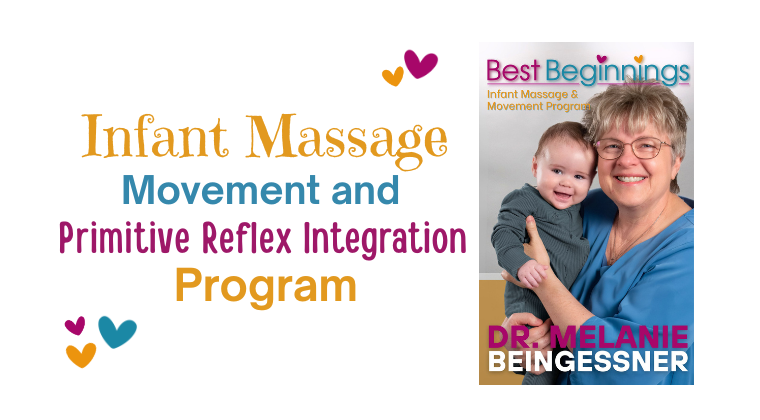
The Best Beginnings Infant Massage and Movement Program teaches you exactly how to support your baby through touch and simple, guided movement. In the program, you will learn:
Step-by-step baby massage techniques
Gentle movements to support comfort and digestion
How to build simple routines that help your baby settle
As you learn and practice these techniques, you will begin to understand what your baby needs and how to respond with confidence.
Over time, baby massage becomes more than just something you try. It becomes a natural part of your day, helping your baby settle more easily, feel more comfortable in their body while creating meaningful moments of connection between you.
References
1. Diego, M. A., & Field, T. (2009). Moderate pressure massage elicits a parasympathetic nervous system response. International Journal of Neuroscience, 119(5), 630–638.
2. Field, T. (2019). Pediatric massage therapy research: A narrative review. Children, 6(6), 78.
3. Bennett, C., Underdown, A., & Barlow, J. (2013). Massage for promoting mental and physical health in typically developing infants under the age of six months. Cochrane Database of Systematic Reviews, 2013(4), CD005038.