
How Infant Massage Helps Parents Read Baby’s Cues With Confidence
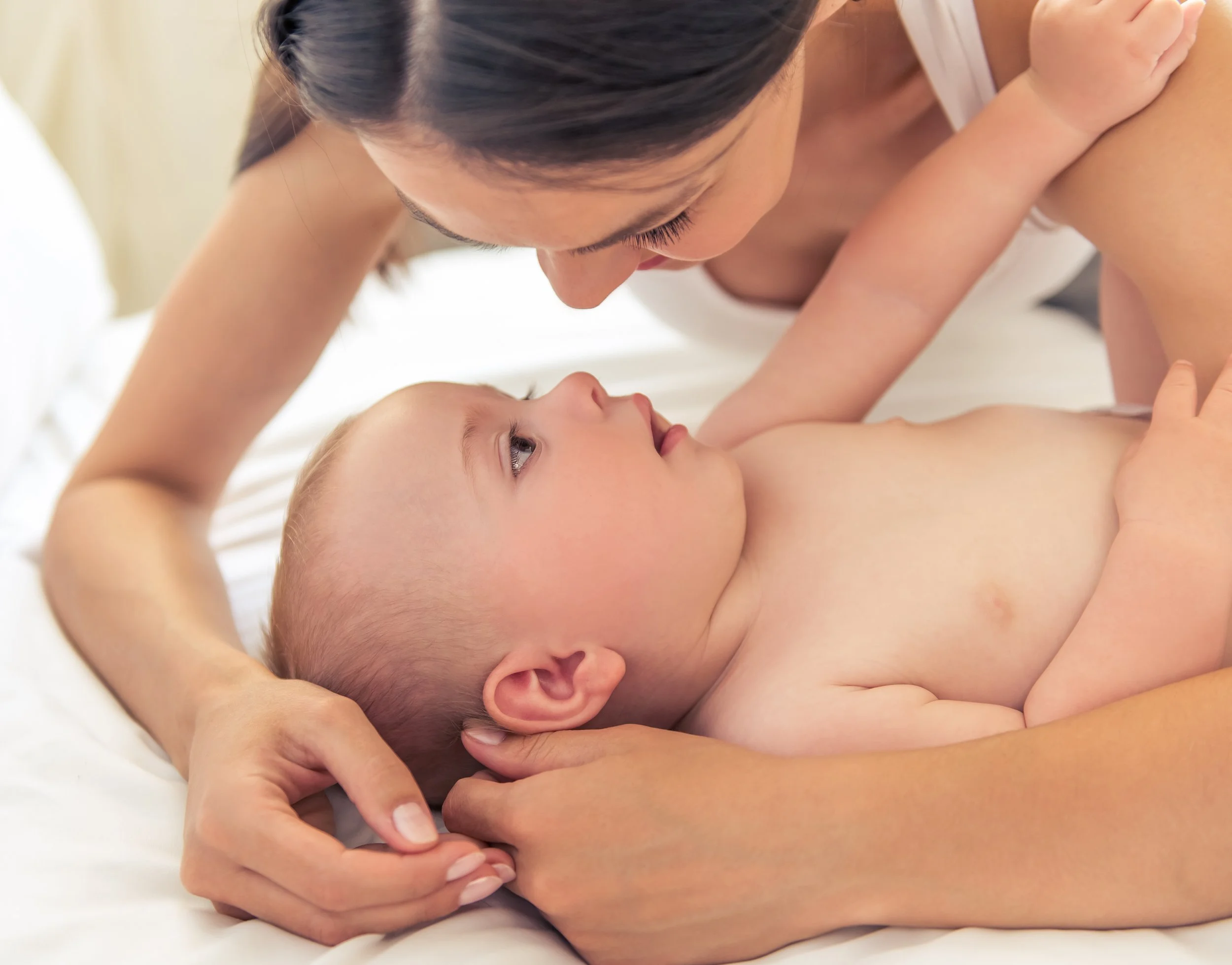

The early months with Baby can feel wonderful, intense, and uncertain all at once. Parents want to respond well, meet Baby’s needs, and feel confident in daily care, but many are unsure how to tell what Baby is communicating. Crying, movement, changes in body tension, and shifts in alertness can feel hard to interpret at first.
What many parents don’t realize is that Baby is communicating all the time. Long before words develop, Baby uses their body to express comfort, stress, interest, and the need for connection. Learning to notice and understand Baby’s cues is one of the most important foundations for confident parenting.
Infant massage offers a gentle, practical way for parents to slow down, observe Baby’s responses, and begin to understand how Baby communicates through their body.
Why Parents Often Feel Unsure in the Early Months
In the early weeks and months, parents are learning everything at once. Feeding, sleep, soothing, and daily routines are new, and Baby’s responses can change quickly. Many parents worry they are missing signals or doing something wrong.
This uncertainty is normal. Baby’s nervous system is still developing, and early interactions are shaped through moment-to-moment responses rather than perfection. Research on parent–infant bonding shows that confidence grows when parents learn to notice and respond to Baby’s signals over time (1).
Confidence does not come from having all the answers. It grows as parents observe, interpret, and respond with care over time.
How Baby Communicates Before Words
Before Baby can speak, communication happens through the body. Changes in muscle tone, movement, breathing, facial expression, and engagement all provide information about how Baby is feeling.
Baby may show comfort by relaxing their body, maintaining eye contact, or staying engaged. Signs of stress may include stiffening, turning away, arching, or becoming unsettled. These responses are not problems. They are Baby’s way of communicating needs.
Research shows that when parents respond consistently and sensitively to these cues, Baby’s sense of safety and connection strengthens (1).
Why Infant Massage Helps Parents Notice Cues More Clearly
Infant massage naturally slows interactions down. Unlike daily care tasks that can feel rushed, massage encourages parents to pause, use gentle touch, and move at Baby’s pace.
Massage provides a predictable, calm context where parents can observe Baby’s responses without urgency. Evidence suggests that infant massage supports parent responsiveness and helps parents become more attuned to Baby’s signals and state changes (2).
Over time, these repeated experiences help parents recognize patterns. They begin to understand what helps Baby feel settled and what signals that Baby has had enough. This awareness carries into everyday moments like feeding, diaper changes, and play.
Confidence Grows Through Responsive Touch
Confidence develops when parents feel responsive rather than reactive. Infant massage supports this by creating a shared experience where parents learn to follow Baby’s cues instead of trying to control outcomes.
When parents respond to Baby’s signals during massage, Baby learns that their communication is heard. This supports emotional regulation and strengthens the parent–infant relationship. Research on nervous system development emphasizes that safe, responsive interactions support Baby’s ability to regulate and feel secure (3).
At the same time, parents learn that they are capable of understanding and supporting Baby’s needs.
What This Looks Like in Real Life
Infant massage does not need to be long or complicated. Even a few minutes of gentle touch can offer valuable insight into Baby’s cues.
Parents may notice that Baby enjoys being massaged at certain times of day rather than others, or that Baby prefers lighter touch, rather than deeper touch. They may learn when Baby needs a pause or prefers movement instead of stillness. These observations help guide daily care in a way that feels natural and supportive.
Massage becomes less about doing something “right” and more about learning together.
Learn More Through Best Beginnings
If you would like to feel more confident understanding your baby’s cues, the Best Beginnings Infant Massage and Movement Program teaches simple, step-by-step techniques that help parents tune into Baby’s responses. Through gentle touch and everyday interaction, parents learn how to recognize patterns, respond more easily, and build a deeper sense of connection with their baby.
References
Feldman, R. (2012). Parent–infant synchrony: A biobehavioral model of mutual influences in the formation of affiliative bonds. Monographs of the Society for Research in Child Development, 77(2), 42–51.
Bennett, C., Underdown, A., & Barlow, J. (2013). Massage for promoting mental and physical health in typically developing infants under the age of six months. Cochrane Database of Systematic Reviews, 2013(4), CD005038.
Porges, S. W. (2011). The polyvagal theory: Neurophysiological foundations of emotions, attachment, communication, and self-regulation. W. W. Norton & Company.