
How Touch Helps Baby Feel Safe and Supported From the Start
In the Early Days, Touch Is How Baby Understands the World

The early days with Baby can feel overwhelming. Everything is new. Baby is learning how to live outside the womb, and parents are learning how to care for a tiny human who cannot yet tell them what they need.
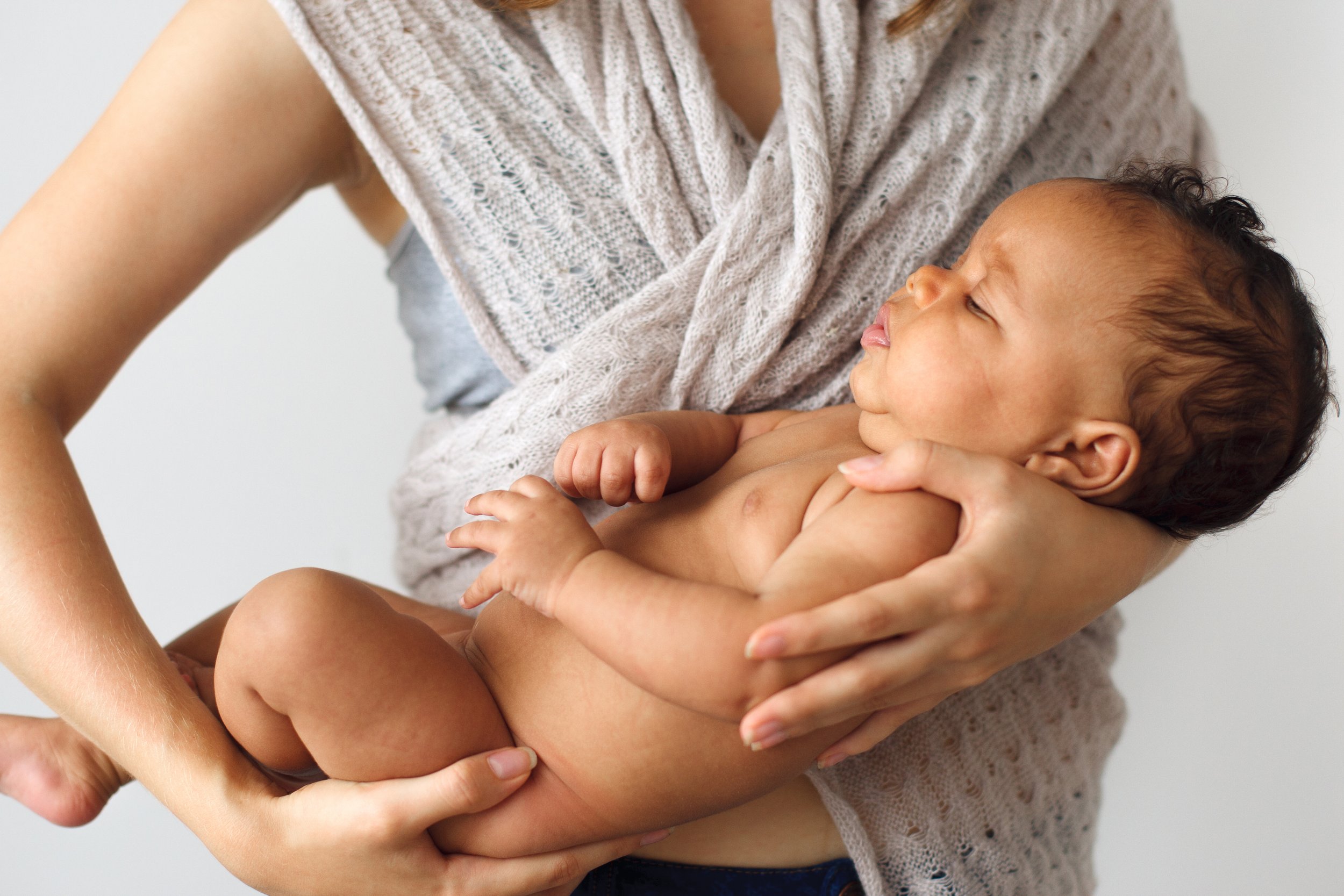
Gentle, loving touch helps Baby feel safe and supported during this big transition into the world.
Before Baby understands words, routines, or even faces, they understand touch. How they are held. How they are soothed. How they are comforted when they are feeling uncomfortable in their body. Research on early parent-Baby interaction shows that these moments of responsive caregiving play an important role in helping Baby feel emotionally supported and connected (1).
Touch is often the first way parents and Baby learn to connect. It reassures Baby that they are not alone and that someone is there to care for them.
Touch Is Baby’s First Way of Feeling Safe
After birth, touch is Baby’s most developed sense. When Baby is held close, gently stroked, or supported with warm hands, their body receives calming sensory signals. These signals help Baby’s breathing slow, their body relax, and their nervous system begin to settle.
When touch is slow, gentle, and responsive, Baby learns that their needs will be met. Over time, these repeated experiences help Baby feel more comfortable in their body and in their surroundings. Research suggests that this kind of attuned touch supports emotional connection and helps Baby feel safe within the caregiver relationship (2).
This sense of safety matters. When Baby feels safe, their body can focus on growing, learning, and connecting rather than staying in a state of stress.
Feeling Safe Helps Baby Learn to Regulate
For Baby, safety is something they feel in their body. When Baby is supported through calm, consistent touch, their nervous system begins to learn how to move from upset back to calm.
Research shows that early experiences of co-regulation with a caregiver help support emotional regulation and connection. When parents respond to Baby’s cues with care and attention, Baby learns that comfort is available and that upset feelings can settle into calmer ones (3).
These early experiences lay important foundations for how Baby manages emotions, relationships, and stress as they grow.
How Infant Massage Can Help
Infant massage gives parents a simple, gentle way to support Baby through touch. It creates a quiet moment to slow down, notice Baby’s cues, and connect without pressure.
Infant massage is not about doing everything perfectly. It is about being present. Slow strokes, warm hands, and watching how Baby responds help parents feel more confident and help Baby feel supported.
Over time, these shared moments help build trust and connection. Baby learns that touch feels good and that their caregiver understands them. Parents often notice they feel calmer and more connected as well.
Simple Ways to Use Touch Every Day
You do not need long routines or special equipment to support Baby through touch. Everyday moments offer plenty of opportunities.
Try this
Place your hands gently on Baby’s back or tummy when they seem unsettled
Pause and notice how Baby responds, adjusting your touch as needed
Speak softly or hum to help create a calm, reassuring rhythm
These small moments add up. They help Baby feel safe and supported and help parents feel more confident in caring for their child.
Learn More Through Best Beginnings
If you would like to support your baby’s sense of safety from the very beginning, the Best Beginnings Infant Massage and Movement Program teaches simple, step-by-step techniques that help parents use gentle, responsive touch with confidence. Through everyday interaction, parents learn how to support Baby’s comfort, connection, and developing sense of security.
References
Feldman, R. (2012). Parent–infant synchrony: A biobehavioral model of mutual influences in the formation of affiliative bonds. Monographs of the Society for Research in Child Development, 77(2), 42–51.
Montirosso, R., & McGlone, F. (2020). The body comes first: Embodied reparation and the co-regulation of infant affect. Neuroscience & Biobehavioral Reviews, 113, 77–87.
Markova, G., & Siposova, B. (2019). The role of oxytocin in early mother–infant interactions: Variations in maternal affect attunement. Infant Behavior and Development, 55, 58–68.