
Rolling, Reaching and Rocking – Building Baby’s Core Through Movement


Why Early Movement Matters
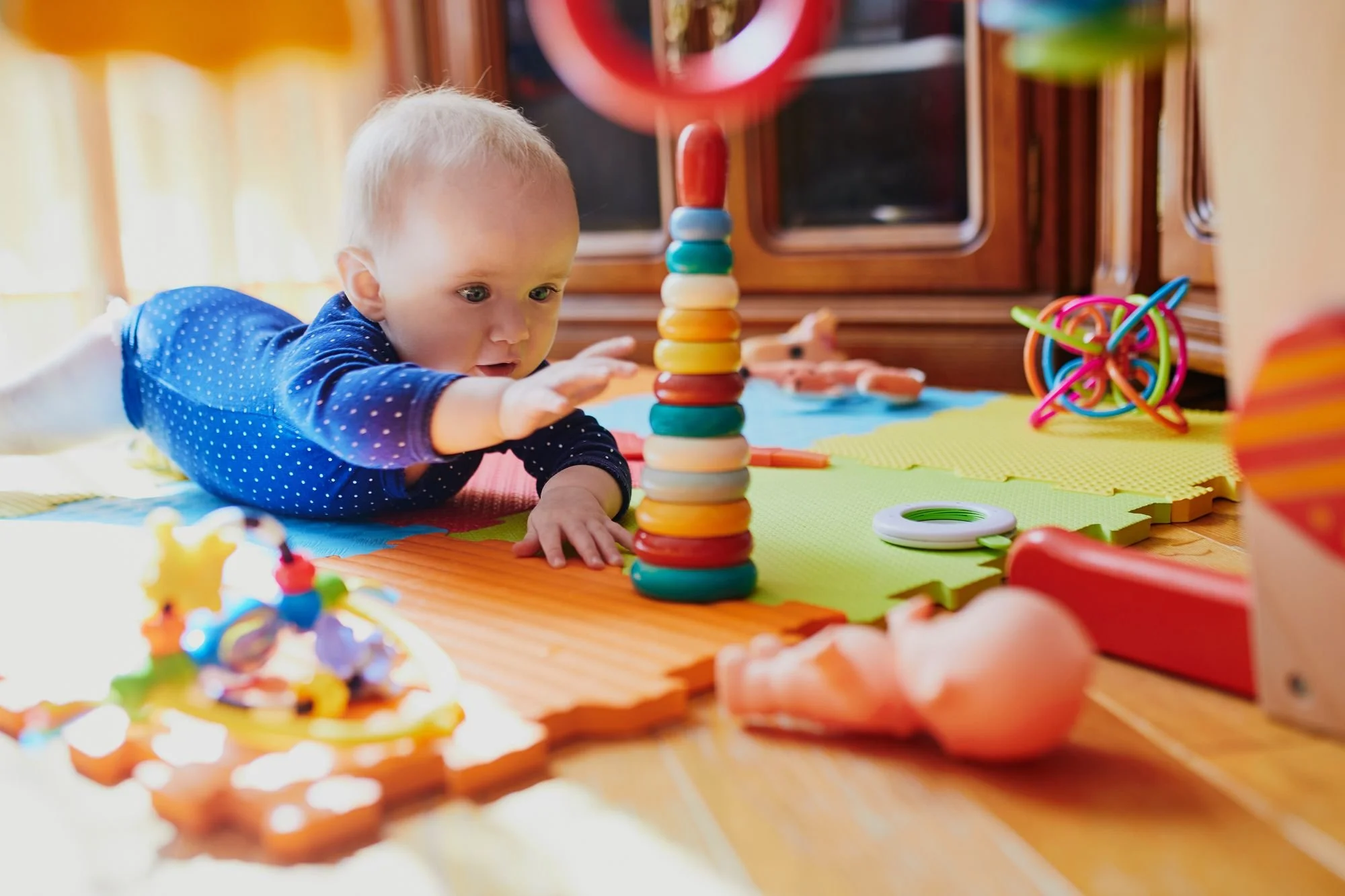
Baby’s earliest movements do much more than build muscles. When Baby rolls, reaches, and rocks, they strengthen their core, improve balance, and lay the groundwork for future motor milestones. These early movements also support growing brain connections that help Baby learn, explore, and feel confident in their body. Research shows that tummy time and simple floor play in the early months is linked with stronger motor development and smoother progress through milestones [1, 2].
Rolling Helps Baby Build Strength and Balance
Rolling is one of the first ways Baby learns how to control their body. Each roll helps Baby shift their weight, develop coordination, and build strength in their tummy, back, and hips. These muscle movements become the foundation for sitting, crawling, and eventually walking.
Rolling also helps Baby learn how their body moves in space. This growing awareness supports balance and confidence as Baby becomes more active. Studies show that babies who have regular opportunities to move freely on the floor often reach their motor milestones earlier and with more ease [1, 2].
Reaching Encourages Coordination and Early Problem Solving
When Baby reaches toward a toy or lifts their hands to explore, they are doing more than reaching. They are practicing important skills like coordinating both sides of their body, shifting their weight, and focusing their attention. These skills support crawling, pulling up, and later fine motor skills.
Newer research shows that babies who experience more opportunities for reaching and tummy time develop stronger motor skills and early thinking skills [3, 1]. Each small reach gives Baby a chance to explore, track objects, and plan simple movements.
Rocking Supports Core Strength and Emotional Comfort
Rocking movements help Baby strengthen the deep muscles that support posture and stability. Rocking also provides a gentle rhythm that helps Baby feel calm and secure. These small movements teach Baby how their body responds as they shift forward and back or side to side.
Research shows that babies who spend more time moving freely on the floor develop stronger motor skills than those who spend long periods in seats or carriers [1, 2].
Here is an example of gentle rocking from the Best Beginnings Infant Massage and Movement program:
Simple Ways to Support Movement at Home
You do not need special equipment to support Baby’s development. A few minutes of open floor time throughout the day can make a meaningful difference.
Here are simple ways to encourage movement:
Give Baby time on their tummy when they are awake and supervised so they can practice pushing, rolling, and lifting their head.
Place toys just a little out of reach so Baby is encouraged to stretch and shift their weight.
Have fun practicing the rocking motion shown above.
Learn More Through Best Beginnings
If you are looking for simple ways to support your baby’s movement and early strength, the Best Beginnings Infant Massage and Movement Program teaches gentle, step-by-step activities parents can use at home. Through playful movement like rolling, reaching, and rocking, parents learn how to support Baby’s core development, body awareness, and growing confidence in their movements.
References
Hewitt L, Kerr E, Stanley RM, Okely AD. Tummy Time and Infant Health Outcomes: A Systematic Review. Pediatrics. 2020 Jun;145(6):e20192168. doi: 10.1542/peds.2019-2168. Epub 2020 May 5. PMID: 32371428.
Carson, V., Zhang, Z., Predy, M. et al. Longitudinal associations between infant movement behaviours and development. Int J Behav Nutr Phys Act 19, 10 (2022). https://doi.org/10.1186/s12966-022-01248-6
Sampaio, M. H. L., Oliveira, G. F., Lopes, M. M. S., & Sampaio, S. A. (2024). Cognitive and motor improvement by tummy time practice in preterm infants. Frontiers in Psychology, 15, 1289446.