
Why Infant Massage Matters – The Science of Touch and Connection
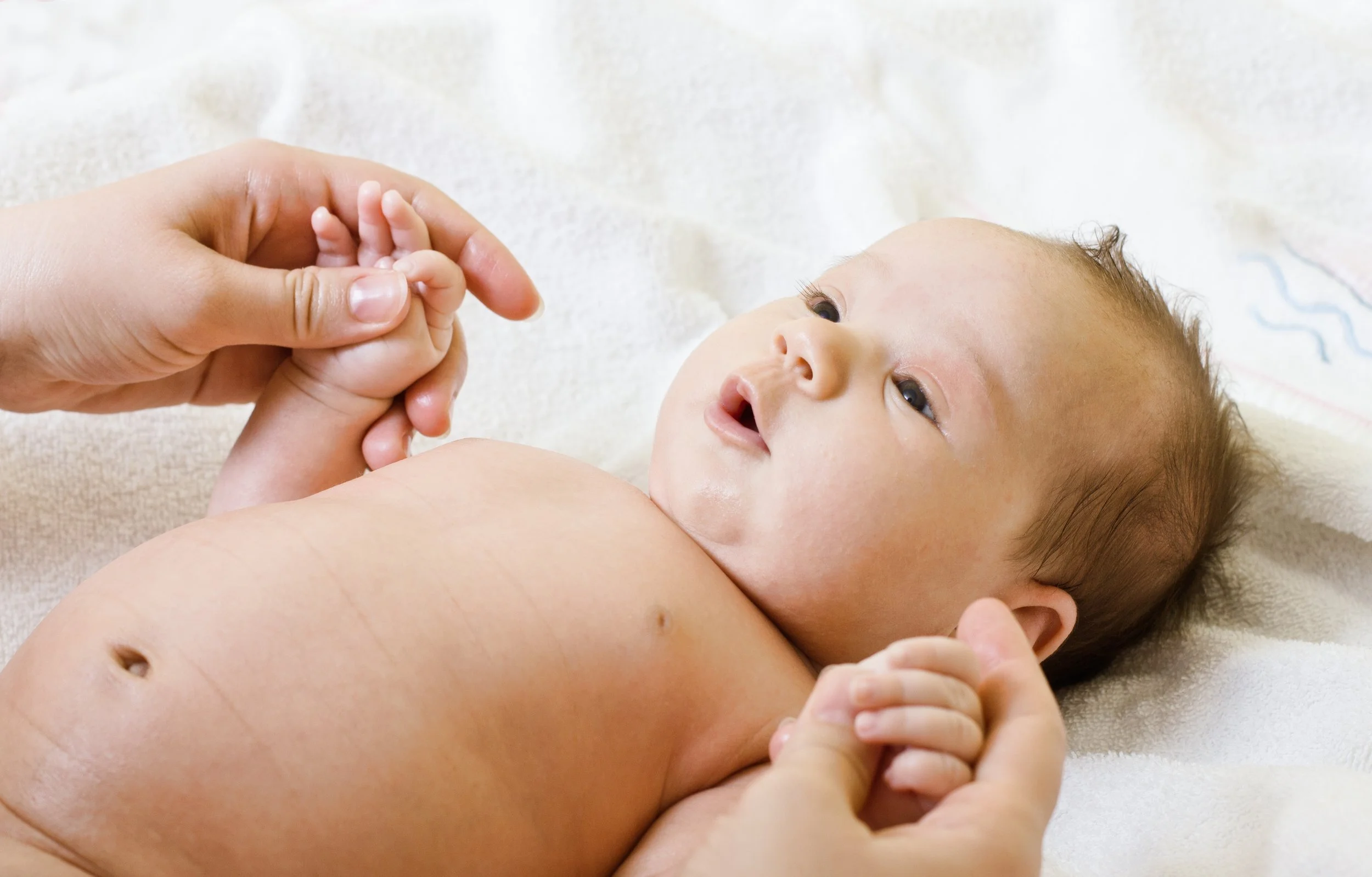

Gentle touch is one of the most powerful ways parents can support Baby’s overall development in the earliest months of life. Long before Baby can understand words or follow routines, their brain and nervous system development are shaped through safe, nurturing physical touch. Research shows that infant massage helps to strengthen brain development, support baby bonding, and promote emotional well being during this critical period of growth (1).
Touch Is Baby’s First Language
Touch is our earliest developing sense, and it begins during pregnancy. Long before Baby can see clearly or understand sound, their nervous system is already responding to physical sensation. Gentle, predictable touch helps Baby’s brain organize sensory information and build a sense of safety and security in their body (2).
When a parent uses slow, intentional strokes during infant massage, Baby’s nervous system receives clear signals of comfort and connection. These early experiences help Baby learn that the world is safe and that their needs will be met through loving care. Over time, this supports emotional regulation, attachment, and trust.
Infant massage is not about doing something perfectly. It is about being present, responsive, and enjoying shared moments of connection.
How Infant Massage Supports Brain Development
Infant massage activates many areas of Baby’s developing brain at the same time. Skin receptors send messages to the brain that support body awareness, early sensory learning, and stress regulation. Research shows that nurturing touch supports the release of oxytocin, often referred to as the bonding hormone, in both Baby and parent (3).
Oxytocin plays an important role in social bonding, calming the nervous system, and supporting healthy emotional development. When Baby experiences regular, loving touch, their brain builds stronger connections between areas responsible for emotion, movement, and self regulation, laying an important foundation for future learning.
Bonding Through Intentional Touch
Bonding through touch is not about fixing fussiness. It is about building trust through consistent, nurturing interaction and shared moments of calm connection. Infant massage creates space for parents to slow down, observe Baby’s cues, and respond with growing confidence.
During infant massage sessions, parents learn how Baby communicates comfort, stress, and preference through movement, breathing, and facial expression. This strengthens the parent Baby relationship and supports parental confidence in daily care routines (2).
Emotional Well Being Starts Early
Touch teaches Baby that they are safe, supported, and connected. Gentle touch helps regulate stress responses and supports Baby’s ability to settle and relax. Over time, infant massage supports emotional stability and early self soothing skills (3).
Research shows that infants who receive nurturing touch often demonstrate improved emotional regulation and calmer behavioral responses, shaping how Baby learns to cope with stress later in life (1).
How Parents Can Begin With Infant Massage
Parents do not need special equipment or long routines to begin infant massage. Just a few minutes of calm, intentional touch during a quiet time of day can support Baby’s nervous system development.
The key is consistency, responsiveness, and a relaxed environment. Following Baby’s cues and adjusting pressure and pace helps ensure massage remains a positive experience.
If you are interested in understanding how touch supports your baby’s development, the Best Beginnings Infant Massage and Movement Program teaches simple, step-by-step techniques parents can use at home. Through gentle, intentional touch and everyday interaction, parents learn how to support Baby’s nervous system, strengthen connection, and build a foundation for healthy development from the very beginning.
References
Field, T. (2014). Massage therapy research review. Complementary Therapies in Clinical Practice, 20(4), 224–229.
Feldman, R. (2012). Parent–infant synchrony: A biobehavioral model of mutual influences in the formation of affiliative bonds. Monographs of the Society for Research in Child Development, 77(2), 42–51.
Uvnäs-Moberg, K., Handlin, L., & Petersson, M. (2015). Self-soothing behaviors with particular reference to oxytocin release induced by non-noxious sensory stimulation. Frontiers in Psychology, 6, 1529.