


Touch Is Baby's First Language
From the moment Baby is born, touch is one of the first ways they experience the world. Long before Baby understands words, they begin learning about comfort, safety, and connection through the way they are held, soothed, and cared for.
The early weeks with Baby can feel wonderful and overwhelming all at once. Baby is adjusting to life outside the womb, and parents are learning how to understand the needs of someone who cannot yet tell them what they want.
Gentle, loving touch helps bring the two of you together.
When you hold Baby close and rest a reassuring hand on their body, you are communicating something important: You are safe. I am here. You are cared for.
Research exploring physical contact between babies and their caregivers has found that touch is much more than a comforting experience. Being held close, cuddled, and gently touched helps Baby manage stress and supports the developing relationship between Baby and parent.
These early interactions are a two-way experience: Baby responds to your touch, and you begin learning to recognize their signals. Over time, these everyday exchanges help strengthen your connection and build the foundations of trust (1).
How Gentle Touch Builds Trust and Emotional Security
Trust doesn't develop in one special moment. It grows through hundreds of small, everyday experiences. Each time you pick Baby up when they need comfort, hold them close, or respond to their signals, you are helping them learn that someone is there to care for them.
Over time, these repeated experiences help Baby develop a growing sense of security within their relationship with you.
Research on parent–infant relationships has found that parents and babies gradually learn to respond to one another through touch, facial expressions, sounds, and movement. This back-and-forth communication is called parent–infant synchrony.
When Baby becomes unsettled and you respond by holding them close, speaking softly, or offering gentle touch, you are helping them feel supported. As these interactions are repeated, you become better at recognizing Baby's needs, while Baby becomes increasingly familiar with your comforting responses. These shared experiences help strengthen your emotional connection and support the development of trust (2).
And the wonderful thing is that building trust doesn't require anything complicated. It happens through the ordinary moments you share every day.
How Responsive Touch Supports Baby's Emotional Development
In the early months, Baby is still learning how to manage their responses to the world. When Baby becomes uncomfortable, tired, or overwhelmed, they often need your help to settle. This is called co-regulation.
Research into early emotional development helps explain why your comforting touch matters. In the first months of life, Baby relies on their caregivers to help manage feelings of discomfort, stress, and overwhelm. When you hold Baby close, speak gently, or offer reassuring touch, you are helping their developing nervous system respond to these experiences. Over time, these repeated moments of support contribute to Baby's growing ability to manage emotions and feel secure in their relationship with you (3).
Touch is especially meaningful when it is responsive.
Some days Baby may enjoy a gentle massage. Other days they may prefer simply being held close. By noticing how Baby responds and adjusting what you do, you are showing them that their signals matter. This is an important part of building trust.
Baby doesn't need every moment to be perfectly peaceful. They need opportunities to experience comfort, reassurance, and a caring response when something doesn't feel right.
How Infant Massage Strengthens Connection and Parent Confidence
Infant massage offers a wonderful opportunity to slow down and spend a few minutes getting to know Baby. As you gently massage Baby's face, arms, belly, legs, back, and feet, you begin to notice which touches they enjoy most.
You might see Baby relax their hands, make eye contact, move their legs, or turn toward your voice. These are some of the ways Baby communicates with you.
You may also notice when Baby has had enough and needs a break. They might begin to fuss, turn their head away, or avoid eye contact. These can be signs that Baby has had enough massage for now.
For parents, infant massage can help build confidence. As you learn to recognize Baby's preferences and respond to their signals, you become more comfortable understanding what they need.
If you're new to infant massage, you can Learn how to massage Baby at home with simple techniques that help you feel more comfortable and confident.
Simple Ways to Build Trust Through Everyday Touch
When touch is gentle, familiar, and guided by Baby's signals, it becomes another way of communicating love, comfort, and reassurance.
There are many opportunities throughout the day to share gentle, reassuring touch:
During diaper changes: Rest your hands gently on Baby's tummy or legs for a moment before beginning.
When Baby is unsettled: Hold them close or offer a comforting hand while speaking softly.
During quiet, alert moments: Try a few slow, gentle massage strokes and notice how Baby responds.
While talking or singing: Combine familiar sounds with gentle, rhythmic patting to bring touch, sound, and rhythm together.
When Baby needs a break, simply pause your touch and give Baby time to respond. Respecting their signals is an important part of building trust.
Building Trust One Touch at a Time
Some of the most meaningful moments with Baby happen during the simplest parts of your day. A warm hand resting on their back. A gentle massage after a diaper change. A quiet moment together before bedtime.
These everyday experiences help Baby become familiar with your touch and learn that comfort and support are available when they need them. And while Baby is learning to trust you, you are learning to trust yourself.
Building trust doesn't require perfect parenting. It grows through the simple, loving moments you share every day.
Learn Baby Massage with Best Beginnings
Building trust and connection with Baby doesn't require complicated routines. Sometimes, knowing a few simple ways to use touch can make everyday moments feel more comfortable and enjoyable for both of you.
The Best Beginnings Online Baby Massage and Movement Program was created to help parents learn how to support Baby's early development through gentle touch, movement, and play.
With more than 40 instructional videos, the program guides you step-by-step infant massage techniques that you can learn at home and incorporate into your daily routine.
You'll learn how to massage different parts of Baby's body and discover gentle movements, rhythmic activities, and sensory play experiences that offer more ways to interact, communicate, and connect as Baby grows.
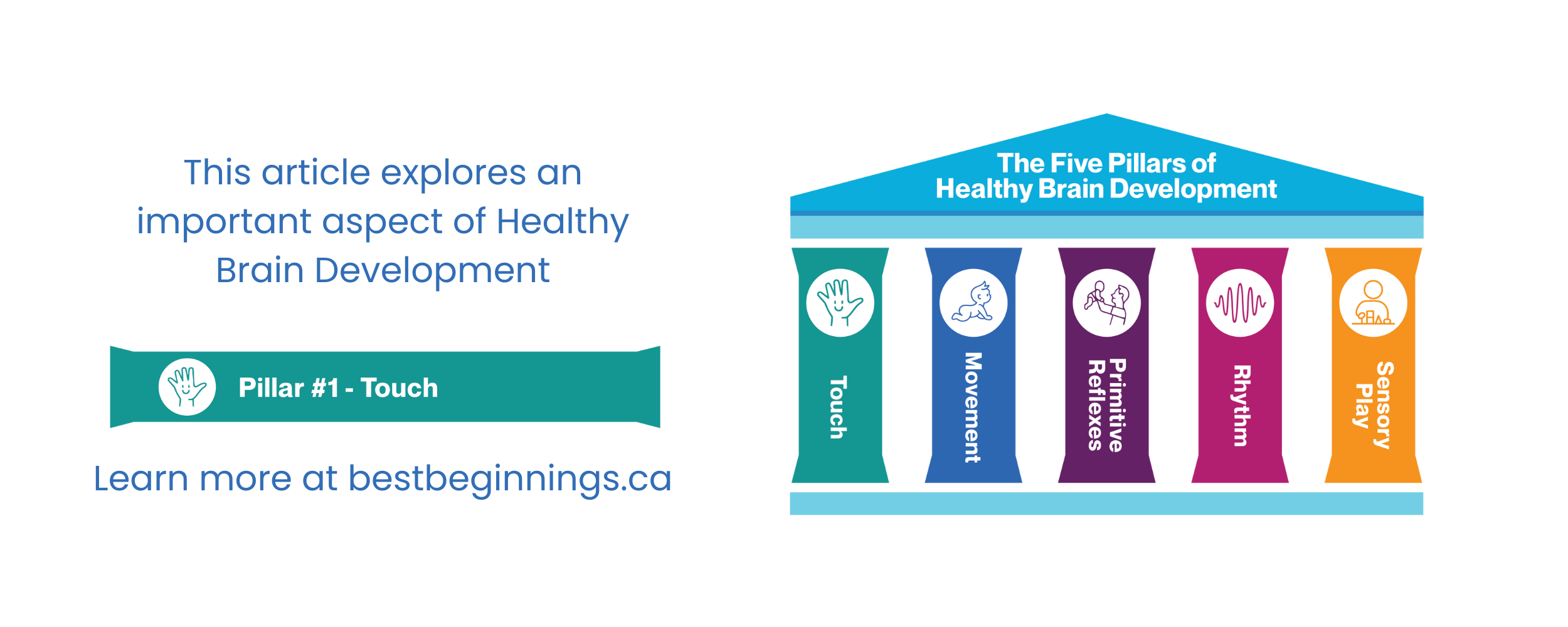
Best Beginnings is built around Five Pillars of Healthy Brain Development: Touch, Movement, Primitive Reflexes, Rhythm and Sound, and Sensory Play. Together, these activities give parents practical ways to support Baby's early development while building confidence in caring for them.
Whether you're a first-time parent or simply looking for new ways to connect with Baby, Best Beginnings helps you turn everyday moments into opportunities for learning, comfort, and connection.
References
1. Bigelow, A., & Rankin Williams, L. (2020). To have and to hold: Effects of physical contact on infants and their caregivers. Infant Behavior and Development, 61, 101507.
2. Feldman, R. (2012). Parent–infant synchrony: A biobehavioral model of mutual influences in the formation of affiliative bonds. Monographs of the Society for Research in Child Development, 77(2), 42–51.
3. Montirosso, R., & McGlone, F. (2020). The body comes first: Embodied reparation and the co-regulation of infant affect. Neuroscience & Biobehavioral Reviews, 113, 77–87.